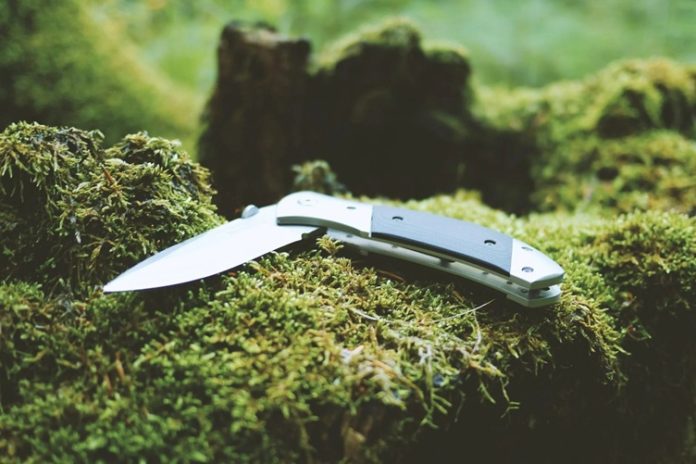
Knives have been invaluable for people outdoors, collectors, tradesmen and hobbyists for a long time. Today, there are several types of knives available, ranging from traditional folding models to automatic and out-the-front (OTF) types for varying preferences and applications. But there’s more to picking a knife than appearance. Building, ergonomics, intended use and maintenance, and local regulations, should all be taken into consideration.
For those that are looking into modern automatic designs, it is important to know how these knives differ in order to make a decision on choosing this kind of knife.
Understanding Automatic Knives
A knife with a blade that folds or slides out by a spring action, operated by pressuring a release mechanism is called an automatic knife. An automatic knife features a mechanism that helps to fold or unfold the blade, unlike a traditional cutting edge, where the user will have to fold or unfold the blade by hand.
Convenience and unique mechanics are among the reasons for automatic knives being attractive. Engineers might love their engineering, outdoor adventurers might want the idea of a compact design they can haul off easily (when legally allowed).
Those looking to buy from an automatic knife manufacturer should not rely just on the deployment system. The blade material, handle construction, locking components, overall fit & finish and quality-control standards of the product can significantly influence the longevity of the product.
So what makes OTF Knives different?
The acronym OTF means “out the front. Unlike handle-folding knives, OTF knives have a blade that slides through an opening in front of the handle. This provides a unique look and function to the design.
OTF Knives come in various sizes and designs. Some will be constructed for general use and collection, others will have more specific designs. Their interesting features as mechanical tools may appeal to outdoor hobbyists, as they are compact.
Don’t assume, however, that OTF knives are the right choice for everything outdoors. A traditional fixed or hand folding knife might be better for some camping activities. The decision of which one is best comes down to which activity the user is planning to use it for, local laws, personal experience, etc.
Picking the Perfect Knife for Outdoor Activities
There are widely varying needs for outdoor activities. A family camping for a weekend may have different requirements of what they want to bring as they are going on a short outing, whereas someone who is collecting knives and going into the area for longer periods of time may have different requirements.
Be careful and hear what they’re thinking before you make your choice on what knives to buy.
Material: Decide what material the knife will cut. Different designs may be required for utility tasks, collecting or camping and outdoor activities in general.
Size: It’s possible that a compact knife offers a more convenient carrying position or a larger Knife may offer a different grip or handling. Size doesn’t always indicate quality.
Materials: This refers to the steel in the blade and the material used for the handle, which affects strength, rustproofing, weighting and maintenance.
Ergonomics: Comfortable handle; secure grip are important factors in any cutting tool.
Outdoor: Knives may be exposed to moisture, dirt, and other contaminants in the outdoor environment. A simple design that is easy to clean and maintain can be beneficial.
Quality Matters When Buying in Quantity
If a retailer, collector or business requires more than one knife for a legitimate business need, they sometimes look into wholesale OTF knives. While bulk purchasing may offer greater variety, the attention should be on quality, rather than the price per unit.
Prior to the bulk order, the buyer must have an understanding of the supplier’s manufacturing standards, quality control process, returns policies and regulations. It can also be helpful to know if the products are meant for collecting or for general utility or some other legal use.
Our advice to you is that a good supplier will not silence materials and construction on the whole but base its communication on aggressive marketing.
Safety should always be the first priority.
The automatic and OTF knives are not only sharp but also have moving parts – please use with responsibility. Users should adhere to the manufacturer’s directions and should avoid knives being able to touch children and users that have not been trained.
When it is not in use, a knife should be safely stored. The inspection also can be done regularly to check for any loose parts, damage, corrosion or other issues that may impact safe use.
On trips outside, it is especially important that cutting tools are kept secure while being transported. Automatic and OTF knives can also be affected by local laws, governing their possession, transportation, sale or carry; varying widely from jurisdiction to jurisdiction.
Automatic and Manual Knives Have Different Advantages
No knife is a perfect design for all people. Manual-folding knives are still in vogue because they are easy to use, multifunctional and come in a variety of patterns. Automatic and OTF designs, on the other hand, appeal to these users based on mechanical features and unique operation.
The key to choosing the right knife is whether it’s compatible for the camping or outdoor task to be used for. A high quality tool that’s well built is often more valuable than a knife chosen solely for its aesthetic appeal.
Different collectors can have different criteria for the decision to prefer a particular item for the collection, such as the type of craftsmanship, the sophistication of the mechanism, informative aspects of the material, or unusual combinations.
Responsible Ownership
Having a knife is a privilege. Before buying or carrying an automatic or OTF knife, buyers should be familiar with applicable laws regarding their location. This can be especially true for items ordered from a different state or country since ownership, shipping and carry laws may vary.
Responsible owners also learn that a knife is a tool and thus should be used as such. Careful storage, routine maintenance, careful handling and proper transportation can minimize the risks unnecessarily.
Final Thoughts
There’s an interesting aspect in the arena of knife design nowadays, and it’s automatic and OTF knives. They have become a favourite among collectors and fanatics due to their mechanical systems, size dimensions and special designs. All the while, the other aspects of buying the product should be considered: quality, application, ergonomics, maintenance, etc., with lawful requirements.
From those that buy a knife to add to their collections to those who want to purchase wholesale OTF knives to go along with a legitimate business, treating the time to understand the product or supplier can lead to a better decision. At all times, good ownership practices and local regulations should be at the heart of the purchase.

